 |
Blamite Game Engine - blam!
00453.06.08.26.0624.blamite
The core library for the Blamite Game Engine.
|
|
Blamite Game Engine - blam!
00453.06.08.26.0624.blamite
The core library for the Blamite Game Engine.
|
Class used to contain and access tag data. More...
#include <tags.h>
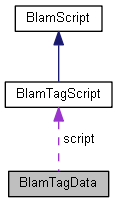
 Collaboration diagram for BlamTagData:
Public Member Functions | |
| BlamTagData () | |
| ~BlamTagData () | |
| bool | SetTagPath (std::string new_path) |
| Updates the tag path. More... | |
| BlamTagInstance * | CreateNewInstance () |
| BlamTagInstance * | GetInstance (std::string identifier) |
| int | GetPokeKey () |
| void | Poke () |
| bool | Good () |
Public Attributes | |
| void * | address = nullptr |
| The address pointing to the start of the tag's data. More... | |
| int | size = 0 |
| The size of the tag's data in memory. More... | |
| char | path [256] |
| The tag's path. More... | |
| std::string | tag_class = "" |
| The tag's short class name. More... | |
| TagOrigin | origin = TagOrigin::Memory |
| The origin of the tag. More... | |
| std::vector< BlamTagInstance * > | instances = std::vector<BlamTagInstance*>() |
| std::string | script_id = "" |
| void * | script_type_address = nullptr |
| BlamTagScript * | script = nullptr |
| bool | uses_global_script = false |
Class used to contain and access tag data.
These store any data needed for tags that isn't strictly the tag's property data - such as the tag class, tag name/path, etc.
| BlamTagData::BlamTagData | ( | ) |
| BlamTagData::~BlamTagData | ( | ) |
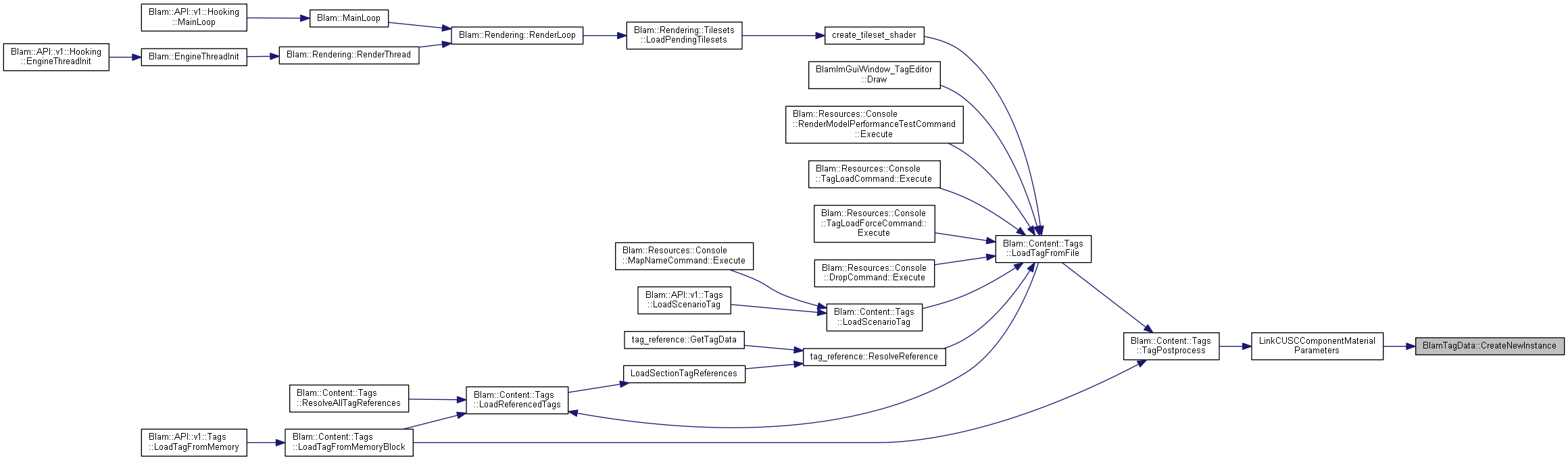
| BlamTagInstance * BlamTagData::CreateNewInstance | ( | ) |
Here is the call graph for this function: Here is the caller graph for this function:| BlamTagInstance * BlamTagData::GetInstance | ( | std::string | identifier | ) |
| int BlamTagData::GetPokeKey | ( | ) |
Here is the caller graph for this function:| bool BlamTagData::Good | ( | ) |
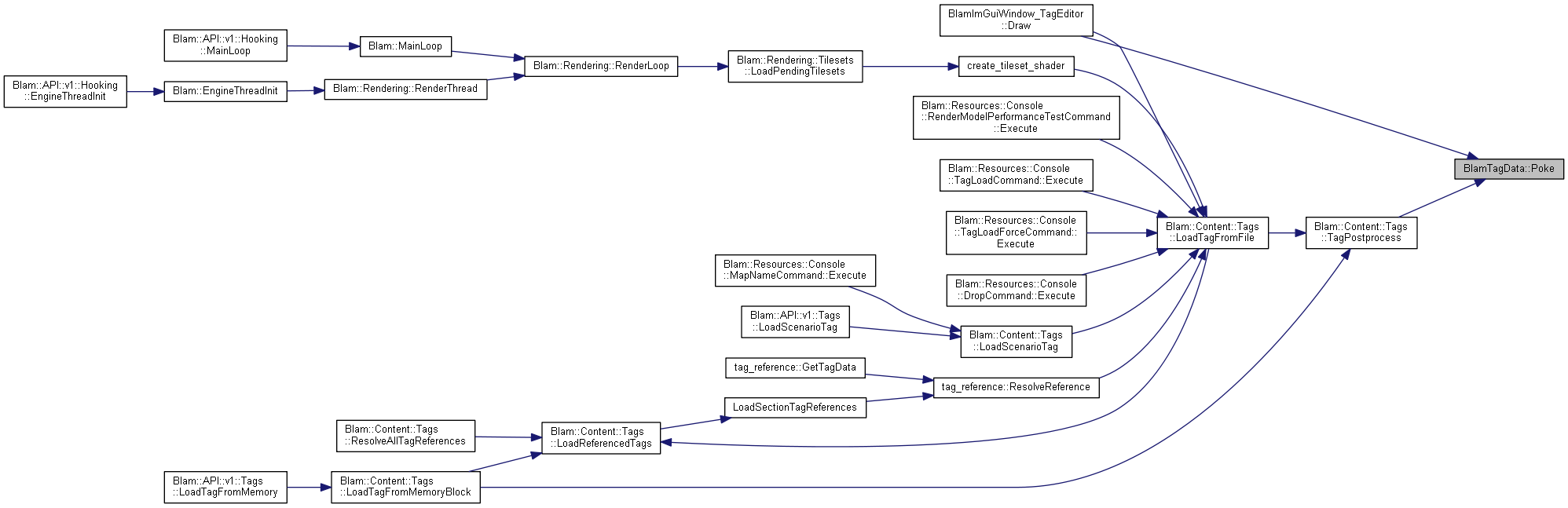
Here is the caller graph for this function:| void BlamTagData::Poke | ( | ) |
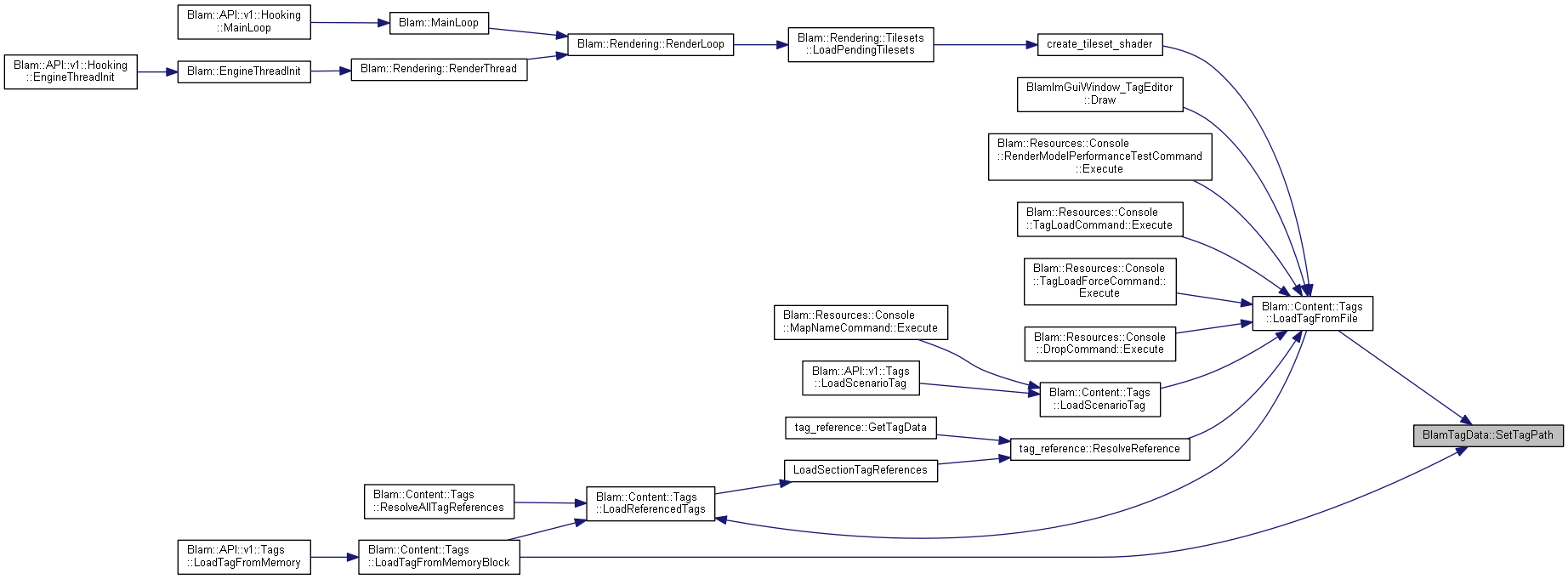
Here is the caller graph for this function:| bool BlamTagData::SetTagPath | ( | std::string | new_path | ) |
Updates the tag path.
| new_path | - The new tag path to use. Maximum length is 256 characters. |
true if the tag path was updated successfully, or false if the provided path was too long. Here is the call graph for this function: Here is the caller graph for this function:| void* BlamTagData::address = nullptr |
The address pointing to the start of the tag's data.
| std::vector<BlamTagInstance*> BlamTagData::instances = std::vector<BlamTagInstance*>() |
| TagOrigin BlamTagData::origin = TagOrigin::Memory |
The origin of the tag.
| char BlamTagData::path[256] |
The tag's path.
This does not always represent a file on disk, but the relative path of the tag's file from the tag data root. For instance, a tag located at:
./tags/levels/solo/040_voi/040_voi.scenario
would have a path of:
/levels/solo/040_voi/040_voi.scenario
Tag paths can be up to 255 characters long, exclduing null-terminator.
| BlamTagScript* BlamTagData::script = nullptr |
| std::string BlamTagData::script_id = "" |
| void* BlamTagData::script_type_address = nullptr |
| int BlamTagData::size = 0 |
The size of the tag's data in memory.
| std::string BlamTagData::tag_class = "" |
The tag's short class name.
| bool BlamTagData::uses_global_script = false |
 1.8.17